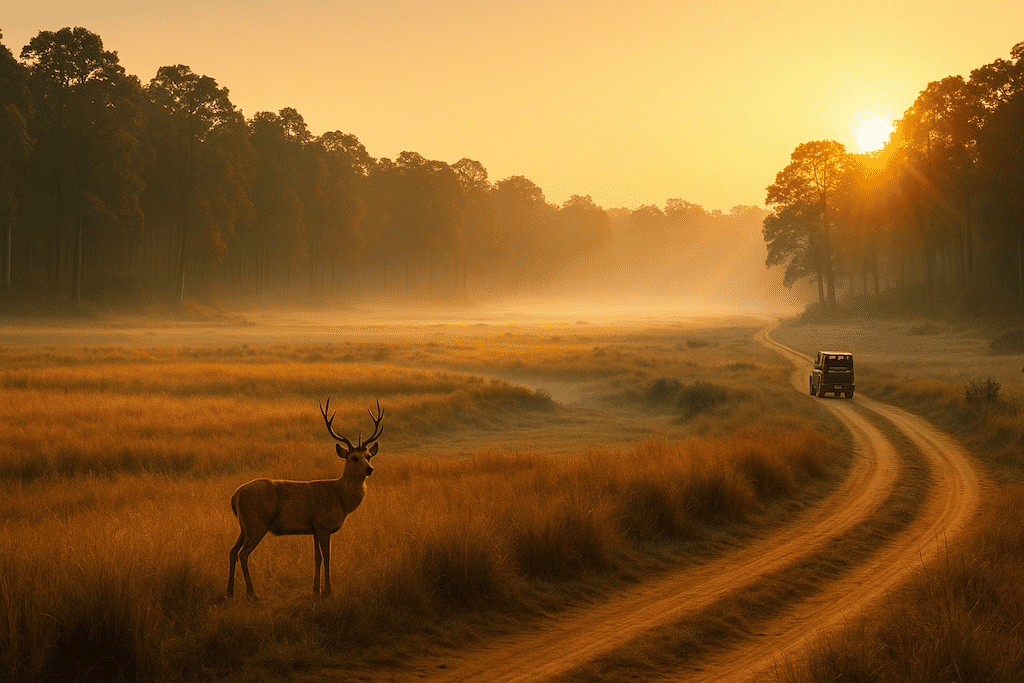
I sat in the back of an open jeep at 5:45 AM, shivering despite three layers of clothing, watching my breath form clouds in the January air. The guide whispered that we might not see much today—the fog was too thick, the grass too tall after the monsoon. But then, maybe fifteen minutes into the safari, a shape materialized through the mist. A massive male tiger, walking maybe twenty meters from our jeep, completely unbothered by our presence.
That moment? That was winter in Kanha.
Three months later, I returned in April. This time I was drenched in sweat by 7 AM, desperate for water, squinting against the harsh midday sun. The landscape looked completely different—dry, brown, sparse. And yet within the first hour, we spotted not one but two tigresses near a rapidly shrinking waterhole. By the end of that safari, we’d seen five different tigers.
Same park. Completely different experiences. And that’s exactly why understanding when to visit Kanha matters just as much as deciding whether to visit.
If you’re trying to plan a Kanha trip and feeling overwhelmed by conflicting advice about the “best” season, I get it. Some sources say winter is perfect. Others insist summer offers better tiger sightings. A few mention monsoon in whispers, like it’s some secret option. And then there’s the shoulder seasons that nobody talks about much at all.
In this guide, I’m going to break down every season, every month, every weather pattern that affects your Kanha experience. By the end, you’ll know exactly when to book based on what matters most to you—whether that’s tiger sightings, comfortable weather, fewer crowds, or the best photography conditions. We’ll also talk about what to pack, how weather affects safari options and pricing in Kanha, and how to set realistic expectations for whichever season you choose.
Let’s figure out when your perfect Kanha experience actually happens.
Understanding Kanha’s Seasons and Park Opening Schedule
Before we dive into month-by-month details, you need to understand Kanha’s basic seasonal structure and when you can actually visit.
The park’s core zones are open from October 1 (or October 15, depending on monsoon conditions) through June 30 each year. That gives you roughly nine months of access to the main wildlife viewing areas where tiger sightings are most common.
From July through September, the park closes its core zones entirely due to monsoon rains. The roads become impassable, wildlife moves into dense vegetation, and the forest needs this break to rejuvenate. However—and this surprises many visitors—buffer zones remain open during monsoon for those willing to experience Kanha in its wildest, wettest state.
Kanha experiences three distinct seasons:
Winter (November to February): Cool to cold temperatures, clear skies, lush post-monsoon greenery, comfortable safari conditions, and peak tourist crowds. Night temperatures can drop to near freezing, while days are pleasant at 20-25°C (68-77°F).
Summer (March to June): Hot to extremely hot temperatures, dry landscapes, excellent wildlife visibility, and the highest probability of tiger sightings. Temperatures regularly exceed 40°C (104°F) in April, May, and early June.
Monsoon (July to September): Heavy rainfall, lush green landscapes, core zones closed, buffer zones open, and dramatically fewer visitors. This is the forest’s breeding and rejuvenation period.
Within these broad categories, there are significant differences between individual months. February feels nothing like November. April offers completely different conditions than June. That’s why we need to look at this month by month to really understand your options.
October: The Tentative Beginning
October is transition season in Kanha—the bridge between monsoon and winter. The park typically reopens around October 1 or October 15, though the exact date depends on when monsoon rains finally stop.
Weather Conditions: Expect lingering moisture from the monsoon with occasional late rains, especially in early October. Temperatures are moderate and pleasant, ranging from 19-31°C (66-88°F). The landscape still shows monsoon’s influence—vibrant green foliage, full water bodies, and lush vegetation everywhere you look.
Wildlife Viewing: This is honestly one of the trickier months for tiger sightings. The vegetation is dense and tall after months of monsoon growth, giving animals plenty of cover. Water is abundant throughout the forest, so animals aren’t forced to congregate at specific waterholes. That said, wildlife activity is definitely increasing as animals adjust to the post-monsoon environment.
Crowds and Availability: October is wonderfully quiet. Most tourists haven’t started their winter travel planning yet, so you’ll find safari slots readily available and far fewer jeeps competing for sightings. Accommodation rates are lower than peak season, making this an excellent budget-friendly option.
Photography: The lush greenery creates beautiful, dramatic backdrops, though the dense foliage can make it harder to photograph animals clearly. The soft light after rains is gorgeous for landscape shots.
What to Pack: Light layers for cool mornings, rain gear just in case, and insect repellent—mosquitoes are still active after monsoon.
October works well if you prioritize uncrowded experiences and don’t mind sacrificing some tiger sighting probability for peace and lower prices.
November: Winter’s Arrival
November is when Kanha really starts hitting its stride. The monsoon is definitely over, the vegetation begins to dry slightly, and the weather turns genuinely pleasant.
Weather Conditions: This is some of the best weather you’ll experience in Kanha. Temperatures range from 14-28°C (57-82°F), with cool, crisp mornings and comfortably warm afternoons. The sky is usually clear, and the air feels fresh. Early morning mist becomes common, creating that mystical atmosphere Kanha is famous for.
Wildlife Viewing: Sightings improve significantly compared to October. The grass and foliage start thinning out, visibility increases, and animals become more active in the comfortable temperatures. Migratory birds begin arriving, making this an excellent month for bird watchers. Tiger sightings are definitely possible, though you’ll still need some patience and luck.
Crowds and Availability: Tourist numbers pick up in November, but it’s not overwhelmingly crowded yet. You’ll want to book safaris and accommodation at least 30-45 days in advance to secure good slots. Prices start rising from October levels but haven’t reached December-January peaks.
Photography: The morning mist creates stunning atmospheric conditions for photography. The light is soft and beautiful, especially during the golden hours. November offers a nice balance between lush scenery and improving visibility for wildlife shots.
What to Pack: Warm layers for early morning safaris (it gets genuinely cold at dawn), lighter clothes for afternoons, and binoculars for bird watching.
November is ideal for first-time visitors who want comfortable weather and don’t mind slightly lower tiger sighting probabilities. It’s also perfect for families with children who might struggle with extreme heat or cold.
December: Peak Season Begins
December marks the official start of peak tourist season in Kanha. The weather is perfect, holiday travelers arrive, and the park gets busy.
Weather Conditions: Simply beautiful. Daytime temperatures hover around 10-25°C (50-77°F), with clear blue skies and comfortable conditions perfect for all-day outdoor activities. Early mornings are quite cold—sometimes dropping to 4-7°C (39-45°F)—creating that signature Kanha mist that photographers love. You might even experience a light frost in the grasslands on the coldest mornings.
Wildlife Viewing: Visibility continues improving as vegetation thins further. Animals are active throughout the day, often basking in morning sun to warm themselves. Tiger sightings require patience but are certainly achievable. The real highlight of December is birdlife—migratory species are now fully present, making Kanha a paradise for bird enthusiasts. You’ll see Indian rollers, golden orioles, paradise flycatchers, and various kingfisher species.
Crowds and Availability: This is when things get competitive. Christmas and New Year holidays bring both domestic and international tourists. Safari slots fill up quickly—you’ll need to book 90-120 days in advance for December visits, especially for the week between Christmas and New Year. Accommodation rates are at their peak, and popular zones like Mukki and Kanha can feel crowded with multiple jeeps at popular sighting spots.
Photography: December offers some of the year’s best photography conditions. The misty mornings create ethereal scenes, the soft winter light is perfect for wildlife shots, and the dried vegetation provides excellent contrast against the green patches that remain. If you’re serious about wildlife photography, December’s conditions are hard to beat.
What to Pack: Seriously warm clothing for morning safaris—I’m talking heavy jackets, gloves, scarves, and even blankets. The open jeeps get cold at 6 AM when you’re sitting still. But also bring lighter layers for midday when temperatures rise.
December is perfect if you want guaranteed good weather and don’t mind crowds or premium pricing. It’s especially good for families and first-time safari-goers who want comfortable conditions.
January: The Coldest Month
January brings Kanha’s coldest temperatures, creating unique wildlife viewing conditions and that magical misty atmosphere the park is famous for.
Weather Conditions: This is genuinely cold for Central India. Morning temperatures regularly drop to 4-7°C (39-45°F), occasionally even touching 0-2°C (32-35°F) on the coldest nights. Thick fog and mist are common in early mornings, sometimes persisting until 8 or 9 AM. Daytime temperatures are pleasant at around 20-23°C (68-73°F), but those mornings will test your cold tolerance.
Wildlife Viewing: Animals behave differently in January’s cold. Tigers and other predators often bask in open areas during morning sun to warm themselves, creating excellent viewing opportunities—if you can see through the fog. The dense morning mist can actually limit visibility in the first hour or two of safaris, which frustrates some visitors. However, once the mist clears, the dry vegetation and animal behavior patterns offer good sighting potential. January is particularly excellent for spotting leopards, which seem more active in the cool weather.
Crowds and Availability: Peak season continues through January. While slightly less crowded than December (no major holidays), it’s still busy with both Indian and foreign tourists. Advance booking is essential—aim for 90-120 days ahead for core zone safaris.
Photography: If you can handle the fog uncertainty, January offers spectacular photography. The mist creates moody, atmospheric images that are impossible to capture in other months. Wildlife silhouettes through fog, tigers emerging from mist, backlit elephants in morning haze—these are January specialties. Just be prepared that some mornings the fog might be so thick that photography becomes challenging.
What to Pack: The warmest clothes you own for morning safaris. I’m serious—thermal underwear, heavy jackets, gloves, warm hats, scarves. Sitting in an open jeep at 6 AM in January Kanha is no joke. But also bring light layers for afternoon when the sun warms things up considerably.
January works wonderfully if you love dramatic misty landscapes and don’t mind the cold. It’s also great if you’re specifically interested in photographing that ethereal morning atmosphere Kanha is known for.
February: The Sweet Spot
Many Kanha regulars consider February the park’s best month—a perfect balance between comfortable weather, improving wildlife visibility, and still-manageable crowds.
Weather Conditions: February’s weather is simply delightful. Morning temperatures are cool but not freezing, around 8-12°C (46-54°F), while days warm to pleasant 25-28°C (77-82°F). The fog and mist that dominated January start clearing earlier in the morning, giving you better visibility from the start of safaris. By late February, you’ll notice temperatures beginning their gradual climb toward summer.
Wildlife Viewing: This is where things get interesting. The vegetation is now quite dry and sparse, dramatically improving visibility. Water sources are starting to shrink, causing animals to establish more predictable patterns around the remaining waterholes. Tiger sightings improve compared to earlier winter months. You’ll also have excellent chances of spotting sloth bears, which become particularly active in February. The combination of good visibility, comfortable weather, and increasing animal activity makes February highly productive for wildlife encounters.
Crowds and Availability: February remains busy but slightly less intense than December-January. Most international tourists have left after the holiday season, though domestic tourists continue visiting. You’ll still need advance bookings (60-90 days ahead), but availability is better than peak winter months.
Photography: February might offer the year’s best all-around photography conditions. The light is gorgeous—soft enough to be flattering but not dim or obscured by mist. Visibility is excellent, animals are active, and the landscape provides good contrast without being too sparse. If you’re planning a dedicated photography trip to Kanha, seriously consider February.
What to Pack: Moderate layering for mornings (still cool but not frigid), light comfortable clothes for daytime, and all your camera gear ready for action.
February is ideal for anyone seeking the perfect balance of weather, wildlife sightings, and relatively manageable crowds. It’s probably my personal recommendation for first-time visitors who want the highest probability of satisfaction.
March: Transitioning to Summer
March bridges winter and summer, offering perhaps the most balanced wildlife viewing conditions of the entire year.
Weather Conditions: The temperature range is comfortable—around 18-33°C (64-91°F). Mornings are pleasantly cool without being cold, and while afternoons get warm, they’re not yet unbearably hot. The weather is dry with virtually no chance of rain. By late March, you’ll definitely feel summer approaching, with temperatures creeping higher and the sun gaining intensity.
Wildlife Viewing: March is outstanding for wildlife. The landscape is now quite dry, vegetation is sparse, and water sources are limited enough to concentrate animal activity. Tigers become increasingly visible as they adjust their behavior for approaching heat. Many consider March the optimal month for tiger sightings—you get summer’s improved visibility without summer’s brutal heat. You’ll also have good chances for leopards, sloth bears, wild dogs, and of course the park’s signature barasingha deer.
Crowds and Availability: Tourist numbers decrease in March as peak winter season ends and international visitors thin out. Domestic tourism continues but is less intense than December-February. You’ll find better safari availability and slightly lower accommodation rates. Booking 30-60 days in advance is usually sufficient.
Photography: Excellent conditions continue from February. The dry landscape provides good backgrounds, visibility is superb, and animal activity peaks around dawn and dusk. The warmer temperatures mean animals are active earlier in morning and later into evening, extending your photography hours.
What to Pack: Light layers for early morning, light breathable clothing for daytime, sun protection (hat, sunglasses, sunscreen), and plenty of water. March is when you start transitioning from winter to summer gear.
March is probably the single best month for tiger-focused trips. You get excellent sighting probability without extreme heat, good availability, and lower prices than peak winter. If understanding how to book Kanha safaris effectively is part of your planning, March offers more flexibility than winter months.
April: The Heat Intensifies
April is when Kanha transitions into full summer mode. The heat becomes serious, but so do the tiger sightings.
Weather Conditions: Hot. Daytime temperatures regularly reach 38-42°C (100-108°F), sometimes even higher. Early mornings start warm around 22-26°C (72-79°F), offering only brief relief before the sun cranks up the heat. The landscape is now thoroughly dried, with brown grass, dusty trails, and intense sun throughout the day. There’s virtually zero chance of rain.
Wildlife Viewing: This is prime tiger sighting season. The combination of dried vegetation and severely limited water sources forces wildlife into predictable patterns. Tigers must visit the few remaining waterholes regularly, often during daylight hours when they’d normally be resting in shade. Your chances of seeing tigers are probably at their annual peak in April. The downside? Most animal activity concentrates in early morning and late afternoon—midday safaris can feel slow as animals retreat to shade during peak heat.
Crowds and Availability: April sees moderate crowds. Many international tourists avoid the heat, but Indian families often visit during spring breaks. Wildlife photographers specifically target April for its exceptional sighting opportunities. Safari bookings are usually available with 20-45 days advance notice, and accommodation rates are lower than winter peaks.
Photography: April offers incredible opportunities if you can handle the heat. The harsh midday light can be challenging, but early morning and late afternoon provide perfect conditions. The dry landscape creates excellent contrast, animals are visible against sparse vegetation, and waterhole scenes with multiple species create compelling shots. The longer daylight hours give you extended photography time compared to winter months.
What to Pack: Maximum sun protection—wide-brimmed hat, UV-blocking sunglasses, high-SPF sunscreen. Light, breathable, light-colored cotton clothing. Most importantly, bring tons of water—at least 2-3 liters per safari. A cooling towel or bandana can be lifesaving. Skip the dark colors and heavy fabrics entirely.
April is perfect for serious wildlife enthusiasts and photographers who prioritize tiger sightings above comfort. If you’re heat-tolerant and focused on wildlife over weather, April delivers results.
May: The Peak of Summer
May represents Kanha at its hottest and driest. It’s brutal, uncomfortable, and absolutely spectacular for wildlife viewing.
Weather Conditions: Extreme heat dominates May. Daytime temperatures regularly exceed 42-45°C (108-113°F), occasionally touching 46-47°C (115-117°F) in heat waves. Even early mornings start around 26-28°C (79-82°F), offering minimal relief. The landscape looks almost desert-like in places—brown, dry, dusty, with most water bodies reduced to small pools. Late May might bring occasional pre-monsoon thunderstorms, but these are unpredictable.
Wildlife Viewing: May offers the absolute best tiger sighting probability of the year. Water scarcity is at its peak, forcing all wildlife to visit the few remaining water sources. Tigers often stay near waterholes throughout the day, making sightings almost guaranteed if you’re in the right zone. Multiple tigers at a single waterhole become common. You’ll also see elephants, gaur, deer species, and sometimes even leopards at these critical water sources. The downside is that animal activity is largely restricted to very early morning and late afternoon—midday safaris can feel like you’re just watching animals resting in shade.
Crowds and Availability: May brings an interesting mix. International tourists largely avoid it due to heat, but domestic tourists—particularly families and student groups—visit in large numbers during summer vacation. The park can actually feel quite crowded, especially on weekends. Despite the crowds, safari availability is generally good with 15-30 days advance booking.
Photography: If you can physically handle it, May offers career-defining wildlife shots. The concentrations of animals at waterholes, the dramatic dry landscape, the intensity of light—it all creates powerful images. The challenge is protecting your equipment from heat and dust while protecting yourself from heat exhaustion. Many professional wildlife photographers specifically target May despite the brutal conditions.
What to Pack: Everything mentioned for April, amplified. Maximum sun protection, cooling accessories, even more water (3-4 liters minimum per person per safari), electrolyte supplements to combat dehydration, and mentally prepare yourself for serious discomfort.
May is exclusively for dedicated wildlife enthusiasts and photographers who can tolerate extreme heat for the payoff of exceptional sightings. If you’re traveling with children, elderly family members, or anyone with heat sensitivity, skip May entirely.
June: The Final Push
June is Kanha’s last hurrah before monsoon closure. It combines May’s extreme heat with increasing atmospheric tension as monsoon approaches.
Weather Conditions: Still searingly hot, with temperatures around 38-44°C (100-111°F). However, June introduces new elements: increasing humidity, darkening skies, occasional dust storms, and the growing probability of pre-monsoon thunderstorms. When these storms hit, they bring intense wind, dramatic temperature drops, and sometimes brief heavy rain. But they’re unpredictable—you might experience nothing or might get caught in a spectacular storm.
Wildlife Viewing: Tiger sighting probability remains excellent as water sources stay severely limited. However, animal behavior changes as they sense monsoon approaching. There’s an atmospheric tension in the forest that’s hard to describe but palpable. On days with approaching storms, wildlife activity can spike or completely shut down depending on atmospheric conditions. June can deliver either spectacular sightings or frustrating dead periods.
Crowds and Availability: June sees declining visitor numbers as domestic summer vacation ends and the approaching monsoon deters many tourists. Safari availability is generally excellent, even with short notice. Accommodation offers the lowest rates before the park closes. For the best value and availability, understanding the different zones and their accessibility becomes important.
Photography: June offers dramatic skies and intense atmospheric conditions that can create stunning images. The combination of dried landscape and building storm clouds, the dramatic light during approaching weather systems, and the tension in wildlife behavior all contribute to powerful photography opportunities. But weather unpredictability means you might also experience missed opportunities when storms roll in mid-safari.
What to Pack: All the summer heat protection items from May, plus rain gear and waterproof bags for your camera equipment. Weather can change rapidly in June.
June works for adventurous travelers who want excellent tiger sightings without crowds and don’t mind heat plus weather unpredictability. It’s also good for budget-conscious wildlife enthusiasts since costs are low.
The park closes after June 30, giving the forest its essential monsoon rest period.
July-September: Monsoon Magic (Buffer Zones Only)
From July through September, Kanha’s core zones close completely. But the park doesn’t disappear—it transforms.
Weather Conditions: Heavy monsoon rains dominate these months, with August typically being the wettest. Total rainfall can reach 1,200-1,500mm across the season. Humidity soars, temperatures moderate to around 25-32°C (77-90°F), and the sky is frequently cloudy or actively raining. Afternoon thunderstorms are common.
Buffer Zone Access: While core zones remain closed, buffer zones like Khatia, Khapa, Sijora, and Phen stay open for visitors willing to experience monsoon Kanha. These areas offer a completely different experience—lush green forests, rushing streams, vibrant wildflowers, and dramatic weather. Tiger sightings are rare in buffer zones, but you’ll see other wildlife, incredible birdlife, and experience the forest at its most verdant and alive.
Why Visit During Monsoon? Honestly, most people don’t. But there’s something special about seeing Kanha transform from brown and dry to explosively green. Nature photographers love the lush conditions, the dramatic skies, and the solitude. Researchers and conservation enthusiasts visit during monsoon to see the forest in its rejuvenation phase. It’s not for typical tiger-focused tourism, but for understanding the full cycle of the ecosystem.
Crowds and Availability: Almost non-existent. You’ll have buffer zones practically to yourself. Accommodation rates hit rock bottom. Booking can happen last-minute with no issues.
Photography: Challenging but rewarding. Protecting camera equipment from rain and moisture is crucial. But the payoff includes lush green landscapes, dramatic storm photography, vibrant wildflowers, and pristine natural scenes untouched by tourist jeeps.
What to Pack: Serious waterproof gear, rain boots, multiple changes of clothes, waterproof bags for electronics, and acceptance that you will get wet no matter what.
Monsoon season is exclusively for nature enthusiasts, photographers interested in landscapes over wildlife, and travelers who want to see Kanha’s wild side away from all tourism infrastructure. It’s definitely not for first-time visitors or tiger-focused trips.
So When Should You Actually Visit? Making Your Decision
After all that month-by-month detail, let me synthesize this into clear recommendations based on different priorities:
If Tiger Sightings Are Your Top Priority: Visit April or May. Accept the brutal heat as the price for exceptional sighting probability. March is a close second if you want slightly more comfortable conditions with only marginally lower sighting rates.
If Comfortable Weather Matters Most: Choose November, February, or March. These months offer the best balance of pleasant temperatures and reasonable wildlife viewing.
If You Want to Avoid Crowds: Target October, early November, late March, or June. You’ll sacrifice either some sighting probability (October, early November) or deal with heat (late March, June), but you’ll have a much more peaceful experience.
If You’re on a Tight Budget: Visit in October, May, or June when accommodation rates are lowest and safari availability is best. Understanding how accommodation location affects your costs and experience helps maximize budget efficiency.
If You’re Traveling with Family/Children: December through February offers the most comfortable conditions for all age groups. Yes, it’s crowded and expensive, but comfort and safety often matter more than sighting statistics when kids are involved.
If You’re a Serious Wildlife Photographer: February through May, with April being the peak. These months offer the best combination of visibility, animal activity, and good light (though you’ll fight heat in April-May).
If You’re a Bird Watching Enthusiast: November through February when migratory species are present and resident birds are most active.
If You Want a Unique, Uncrowded Experience: Consider June or the buffer zones during monsoon (July-September). You’ll see a completely different side of Kanha that few tourists experience.
Realistic Expectations: What Each Season Actually Delivers
Let me be straight with you about what you can realistically expect in each season, because brochures and tour operators sometimes oversell.
Winter (Nov-Feb) Reality: You’ll probably see tigers if you book 4-6 safaris, but it’s not guaranteed. The cold mornings are genuinely uncomfortable, and fog can limit visibility. However, the overall safari experience is delightful, you’ll see plenty of other wildlife, and bird watching is exceptional. Come for the complete experience, not just tigers.
Summer (Mar-Jun) Reality: Tiger sightings are genuinely excellent, often multiple tigers per day if you’re in good zones. But the heat is no joke—some people find it physically exhausting and difficult to enjoy despite the sightings. Midday is brutal, and you’ll spend a lot of time just watching animals rest in shade. If you can’t handle serious heat, your improved tiger odds won’t matter because you’ll be miserable.
October Reality: This is about experiencing Kanha in transition, not about guaranteed tiger sightings. You’ll see beautiful green landscapes, experience quieter safaris, and pay less. But if you need to see a tiger to feel satisfied, October might disappoint.
Monsoon Buffer Zones Reality: You’re going for the experience and the landscape, not wildlife sightings. Think of it as forest trekking with the possibility of animal encounters, not as wildlife safari. Adjust expectations accordingly.
Practical Planning Tips for Any Season
Regardless of when you decide to visit, here are some season-agnostic tips:
Book Multiple Safaris: Two safaris is a gamble. Four is reasonable. Six is ideal if you’re serious about tiger sightings. More safaris = more chances, regardless of season.
Target Different Zones: Don’t book all your safaris in one zone. Spread them across Mukki, Kanha, Kisli, and Sarhi to maximize your chances of being in the right place at the right time.
Mix Morning and Afternoon: Each time slot has advantages. Mornings generally see more animal activity, but afternoons can surprise you. Book both.
Choose Accommodation Strategically: Location matters more than luxury in Kanha. Stay near the gate that accesses your preferred zones to minimize pre-dawn travel time.
Pack for Layers: Even in summer, early mornings can be cool. Even in winter, afternoons warm up. Layers give you flexibility regardless of season.
Manage Your Expectations: Tigers are wild animals. Even in peak season, even with excellent guides, sightings aren’t guaranteed. Come prepared to appreciate the entire forest ecosystem, not just the tigers.
Consider a Longer Stay: If your schedule allows, spending 4-5 days instead of 2-3 dramatically improves your chances of meaningful wildlife encounters and gives you time to experience different aspects of the park beyond just core zone safaris.
Activities Beyond Safaris in Different Seasons
Your Kanha experience doesn’t have to be exclusively about jeep safaris, and different seasons open up different activity options.
Winter Activities: Bird watching walks in buffer zones, village visits to learn about Gond and Baiga culture, nature trails focusing on plant identification, photography workshops offered by many lodges, and evening wildlife documentaries and talks organized by resorts.
Summer Activities: Early morning and evening buffer zone walks (midday is too hot), visiting the park museum to learn about conservation efforts, photography focused on harsh-light conditions and landscape, and pool time at your resort during the brutal midday hours.
Monsoon Activities: Dramatic storm watching, monsoon photography in buffer zones, bird watching (many species are active during monsoon), understanding the forest ecosystem’s rejuvenation process, and experiencing the solitude of off-season Kanha.
Exploring alternative activities in Kanha can enrich your visit regardless of season, giving you multiple ways to connect with the forest beyond sitting in a jeep hoping for tigers.
My Personal Recommendation
If I had to choose one month to recommend for a first-time Kanha visitor, it would be March. Here’s why:
March delivers excellent tiger sighting probability without summer’s extreme heat. The weather is comfortable enough that everyone in your group will enjoy the experience, not just tolerate it. Crowds are manageable, availability is good, and prices are reasonable. The visibility is excellent, photography conditions are near-perfect, and you’ll see a good variety of wildlife beyond just tigers.
March doesn’t give you winter’s lush greenery or summer’s absolute peak tiger sightings, but it offers the best overall balance. Most people leave March safaris feeling satisfied with both the experience and the sightings.
That said, February is a very close second, and if you’re specifically focused on tigers above all else, April is hard to beat despite the heat.
Final Thoughts: Embrace the Season You Choose
Here’s what I’ve learned after visiting Kanha across different seasons: there’s no universally perfect time. There are only different experiences, each with its own character.
I loved the mystical misty mornings of January, even though the cold made me question my decisions at 5:45 AM. I loved the intense, almost primal experience of May heat and watching three tigers at a drying waterhole. I even loved the quirky adventure of exploring buffer zones during monsoon, getting thoroughly soaked but seeing the forest in a way 99% of visitors never experience.
Each season taught me something different about Kanha, about wildlife behavior, about how ecosystems function across changing conditions. If you approach your visit with curiosity about the season itself rather than disappointment that it’s not a different season, you’ll have a richer experience.
So choose your season based on your priorities and constraints. Book your safaris well in advance (see the complete safari booking guide for timing). Pack appropriately. Set realistic expectations. And then show up ready to experience whatever Kanha decides to show you that day.
Because even in the “wrong” season, Kanha can deliver moments that stay with you forever. A leopard crossing your path in October mist. A tigress with cubs in February’s perfect morning light. Five tigers at a waterhole in May’s brutal heat. A storm rolling across the meadow in June’s dramatic atmosphere.
These moments don’t care what month your guidebook called “best.” They just happen, if you’re present and paying attention.
Now go book your trip. Kanha is waiting, and whichever season you choose, it has something remarkable to show you.