The best time to visit Egypt is October through April when temperatures range from 60-80°F (15-27°C), offering comfortable sightseeing weather with minimal rainfall. Peak season runs December-February with higher prices and crowds, while shoulder months (October, November, March) provide ideal weather with fewer tourists. Summer months (May-September) see extreme heat exceeding 100°F (38°C) in southern regions like Luxor and Aswan, though prices drop significantly and Red Sea resorts remain popular for beach activities.
Here’s the thing about Egypt—timing your trip can literally make or break your experience. I’m not being dramatic. The difference between visiting in January versus July is the difference between comfortably exploring ancient temples and feeling like you’re melting on hot stone steps at 10 a.m.
I learned this the semi-hard way during my first trip. I went in late May thinking I’d beat the summer heat and the winter crowds. Well, I was half right. The crowds were manageable, but the heat? Let’s just say I spent more time seeking shade than I’d planned. It wasn’t terrible, but it definitely made me appreciate why most experienced travelers have strong opinions about Egypt’s seasons.
So if you’re trying to figure out when to book your Egypt trip, this guide will walk you through every month, what to actually expect weather-wise, and perhaps more importantly, when the crowds and prices peak. Because honestly, the “best” time really depends on what matters most to you.
Understanding Egypt’s Climate
Egypt isn’t like other destinations where you can kind of wing it with the weather. The country has a desert climate, which means it’s generally hot and dry year-round, but the intensity varies dramatically depending on when and where you go.
The northern coast along the Mediterranean (Alexandria, for example) stays relatively mild and gets occasional winter rain. Cairo sits in the middle, geographically and temperature-wise. And southern Egypt—Luxor, Aswan, Abu Simbel—that’s where things get seriously hot, especially in summer.
Egypt basically has two main seasons: a cooler season (roughly October through April) and a hot season (May through September). There’s no real rainy season like you’d find in tropical destinations. Rain is rare throughout Egypt, though you might catch a shower or two in winter months along the coast.
The other factor that doesn’t always show up in temperature charts? Sun intensity. Egypt’s sun is strong. Even in cooler months, you’re dealing with intense UV exposure, especially when you’re spending hours at outdoor archaeological sites with minimal shade.
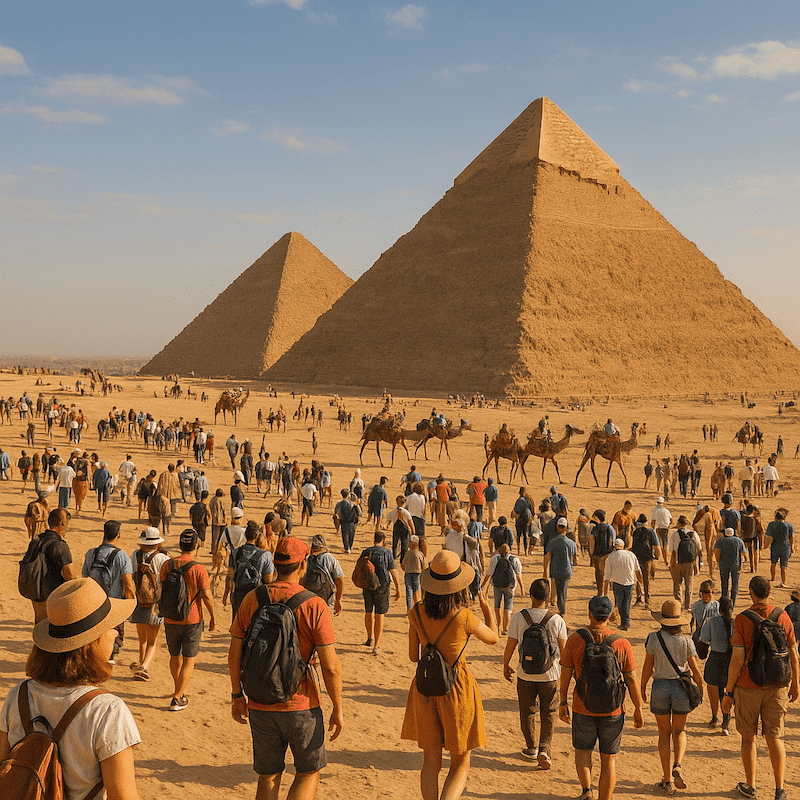
Peak Season vs. Shoulder Season vs. Low Season
Before we dive into month-by-month details, let’s talk about what these terms actually mean for Egypt travel.
Peak Season (December – February)
Weather: Perfect. Comfortable temperatures, minimal rain, ideal sightseeing conditions.
Crowds: Maximum. Everyone has the same idea.
Prices: Highest of the year. Hotels, tours, and even some restaurants charge premium rates.
Best for: Travelers with fixed schedules (like winter holidays), families during school breaks, or people who prioritize guaranteed good weather over budget.
Shoulder Season (October-November, March-April)
Weather: Still excellent, though March-April starts warming up considerably.
Crowds: Moderate. Noticeably fewer tourists than peak winter months.
Prices: More reasonable. You can find better deals on accommodation and tours.
Best for: First-time visitors who want good weather without peak season chaos, photographers seeking better lighting conditions, and budget-conscious travelers who still want comfortable temperatures.
Low Season (May – September)
Weather: Hot to extremely hot, especially July-August when temperatures regularly exceed 100°F (38°C) in the south.
Crowds: Minimal, especially away from Red Sea resorts.
Prices: Significantly lower. Major discounts on hotels and tours.
Best for: Serious budget travelers, people who tolerate heat well, Red Sea beach/diving enthusiasts who don’t mind hot weather.
For more detailed budget strategies, check out: Egypt Budget Travel Guide: How to Visit Egypt on $30-50 Per Day.
Month-by-Month Weather Breakdown
January: Peak Winter
Average Temperature: 57-68°F (14-20°C) depending on location
Rainfall: Minimal, though possible in coastal areas
Crowd Level: Very High
Price Level: Very High
January is technically the coldest month in Egypt, though “cold” is relative. In Cairo, daytime temperatures are pleasant for sightseeing—think 60s to low 70s°F. Southern cities like Luxor and Aswan are warmer, hitting the mid-70s to low 80s°F during the day.
What surprised me? The mornings and evenings can actually feel chilly, especially inside those massive stone temples. I watched tourists shivering at Karnak at 7 a.m., and I totally got it. Bring layers.
January is busy because it coincides with winter holidays in Europe and North America. Expect crowds at major sites, higher hotel rates, and the need to book popular tours and Nile cruises well in advance. But the weather? It’s genuinely perfect for sightseeing all day without wilting.
February: Prime Conditions
Average Temperature: Similar to January, gradually warming
Rainfall: The driest month of the year
Crowd Level: High
Price Level: High
February continues January’s comfortable weather but with even less chance of rain. This makes it particularly popular with divers and photographers who want optimal visibility and clear skies.
The temperatures start edging up slightly toward the end of the month, which is actually nice—you get warm, sunny days without the intensity of spring heat. Luxor and Aswan remain comfortable in the 70s-80s°F range.
Crowds remain substantial, especially around Valentine’s Day and any school holiday periods. Prices stay elevated but sometimes drop slightly compared to December-January peaks.
March: Spring Arrives
Average Temperature: 57-73°F (14-23°C) in Cairo; warmer in the south (72-84°F)
Rainfall: Very low
Crowd Level: Moderate to High (Spring Break increases numbers)
Price Level: Moderate to High
March marks the beginning of spring, and honestly, it’s one of my favorite times for Egypt. The weather is still beautiful—warm enough to be pleasant but not oppressively hot. Cairo sits in the low to mid-70s°F, while southern destinations creep into the 80s°F.
One thing to watch for: khamsin winds. These hot, sandy desert winds can blow through Egypt, especially in spring. When they hit, visibility drops, sand gets everywhere, and it’s just generally unpleasant. They don’t happen every day, but they’re worth knowing about.
Crowds vary depending on school holiday schedules. Early March can be quieter, but late March through early April often sees a surge with spring break travelers. Prices start dropping from peak winter rates, making it a decent value proposition.
April: Warming Up
Average Temperature: 63-82°F (17-28°C) in Cairo; 79-95°F (26-35°C) in the south
Rainfall: Rare
Crowd Level: Moderate
Price Level: Moderate
April is when you really start feeling Egypt’s heat potential, especially if you’re heading south. Cairo is still pleasant—think comfortable warmth—but Luxor and Aswan can hit the mid-90s°F during the day.
This is still considered one of the better months to visit because the heat is manageable with early starts and afternoon breaks. Plus, crowds thin out after Easter holidays, and prices continue dropping from winter peaks.
The key strategy for April: plan your outdoor activities (temples, pyramids, archaeological sites) for early morning or late afternoon. Midday is for museums, indoor attractions, or hotel pool time.
May: Heat Intensifies
Average Temperature: 70-91°F (21-33°C) in Cairo; 88-104°F (31-40°C) in southern Egypt
Rainfall: Virtually none
Crowd Level: Low
Price Level: Low to Moderate
May marks the official start of hot season, and southern Egypt becomes legitimately challenging for extended outdoor sightseeing. Aswan and Luxor regularly hit 100°F+ during the day.
Cairo and the Mediterranean coast stay more tolerable—uncomfortable at times, yes, but manageable. The Red Sea resorts actually work well in May because you’re planning on being in or near water anyway.
The upside? Prices drop significantly, crowds thin out dramatically, and you’ll have major sites practically to yourself at certain times of day. Just be realistic about your heat tolerance. This isn’t the time for all-day temple marathons.
June: Summer Heat Arrives
Average Temperature: Regularly exceeding 95°F (35°C) in most areas; 104°F+ (40°C) in the south
Rainfall: None
Crowd Level: Low (except Red Sea resorts)
Price Level: Low
June is when families with school-age kids start appearing because of summer breaks, but overall tourist numbers remain low compared to winter months. The heat keeps many people away, and honestly, I understand why.
If you’re visiting Egypt in June, focus on early morning starts (think 6 a.m. at the pyramids), take long midday breaks in air-conditioned spaces, and plan indoor activities during peak heat hours. Red Sea resorts like Hurghada and Sharm El Sheikh remain popular because the water provides relief.
Budget travelers can score excellent deals on hotels and tours this month. Just know what you’re signing up for heat-wise.
July-August: Peak Summer
Average Temperature: Consistently over 100°F (38°C) in most areas; 105-115°F (40-46°C) in deserts and southern regions
Rainfall: None
Crowd Level: Very Low inland; Moderate at beach resorts
Price Level: Lowest of the year
July and August are the hottest months in Egypt, and I’m not going to sugarcoat it—this is brutal heat, especially if you’re planning traditional sightseeing in Luxor, Aswan, or even Cairo.
The desert areas can hit 115°F or higher. Standing in direct sunlight at ancient temples becomes genuinely unsafe during midday hours. Heat exhaustion and sunstroke are real risks if you’re not extremely careful.
That said, some people make it work by being strategic: ultra-early morning starts (5-6 a.m.), long air-conditioned breaks from 11 a.m. to 4 p.m., and focusing on indoor attractions like museums during peak heat. The Red Sea coast remains popular for diving and beach activities.
The major advantage? Rock-bottom prices and empty sites. If you’re heat-tolerant and flexible with your schedule, you can have incredible experiences without crowds. Just prioritize safety—drink water constantly, wear sun protection, and know your limits.
September: Heat Continues
Average Temperature: Still very hot, though slightly cooling from August peaks
Rainfall: None
Crowd Level: Low
Price Level: Low
September remains hot but is marginally more bearable than July-August, especially toward the end of the month when temperatures start their gradual decline. It’s still not ideal for heat-sensitive travelers, but it’s workable with the same strategies mentioned above.
This is another good month for serious budget travelers. Prices remain low, crowds are minimal, and you’re starting to get the first hints of the approaching cooler season.
October: Shoulder Season Begins
Average Temperature: 68-86°F (20-30°C) in Cairo; still warm in the south but dropping
Rainfall: Rare, though possible early in the month
Crowd Level: Moderate (increasing as month progresses)
Price Level: Moderate
October is when Egypt becomes pleasant again for most travelers. Temperatures drop noticeably, especially by mid-to-late month. Cairo hovers in the 70s-80s°F, and even southern destinations become comfortable for daytime sightseeing.
This is probably my top recommendation if you want great weather, manageable crowds, and reasonable prices all at once. Early October still sees some summer heat, but by the end of the month, it’s genuinely nice.
Crowds start picking up as winter approaches, but it’s nowhere near the December-February crush. Hotels and tours offer better rates than peak season, making this a sweet spot for value-conscious travelers who still want good conditions.
November: Ideal Conditions Return
Average Temperature: 61-77°F (16-25°C) in Cairo; comfortable throughout the country
Rainfall: Low, though occasional showers possible on the coast
Crowd Level: Moderate to High
Price Level: Moderate to High
November brings back that perfect Egypt weather—warm, sunny days with cool evenings. It’s comfortable for all-day sightseeing without feeling too hot or too cold. This is when tourism really picks up again as word spreads that conditions are ideal.
Prices start climbing as we approach peak season, and popular hotels and Nile cruises book up faster. If you’re planning a November trip, book accommodation and major tours well in advance to get better rates.
The weather is similar to October but slightly cooler on average, which some people prefer, especially if you’re doing a lot of walking and outdoor activities.
December: Peak Season Returns
Average Temperature: Similar to January, cool to mild
Rainfall: Low
Crowd Level: Very High
Price Level: Very High
December combines perfect weather with holiday travel season, which means crowds and premium prices. Expect major sites to be busy, especially around Christmas and New Year’s when hotels can be booked solid months in advance.
That said, the weather genuinely is excellent. If you’re visiting during December, the conditions won’t disappoint—it’s the crowds and costs you’ll need to manage. Book everything early, be prepared for busy sites, and consider visiting popular attractions very early or late in the day to avoid peak crowds.
Special Weather Considerations
Khamsin Winds
These hot, dust-laden winds blow in from the Sahara, typically between March and May. When khamsin hits, temperatures can spike 20°F in a couple of hours, visibility drops dramatically, and sand gets absolutely everywhere—your hair, your camera, your food.
Khamsin episodes usually last a few hours to a couple of days. There’s not much you can do except wait them out. Stay indoors when possible, protect electronics and cameras, and be patient.
Regional Temperature Differences
Egypt’s climate varies significantly by region:
- Alexandria and Mediterranean coast: Most moderate temperatures year-round, occasional winter rain
- Cairo: Hot summers, mild winters, generally dry
- Luxor and Aswan: Extreme summer heat (easily 10-15°F hotter than Cairo), very dry
- Red Sea coast: Warm year-round, cooled by sea breezes
- Desert areas: Extreme temperature swings—hot during day, surprisingly cold at night
Your itinerary matters. If you’re spending most of your time in southern Egypt (Luxor, Aswan, Abu Simbel), summer months are significantly more challenging than if you’re focusing on Cairo, Alexandria, and the Red Sea coast.
Inside Temples and Tombs
Even in hot months, the interiors of temples and especially underground tombs can be surprisingly cool—sometimes almost cold compared to outside temperatures. Bring a light layer you can throw on, particularly in winter months when the temperature difference is more dramatic.
Planning Around Activities
Different activities have different optimal timing:
Pyramid and Temple Sightseeing
Best months: November-March for most comfortable all-day exploring. October and April work well too.
Avoid: June-August unless you’re prepared for extreme heat management.
Nile Cruises
Best months: December-February for ideal weather, though October-November and March offer better value with good conditions.
Consider: Summer cruises can work because you’re on a climate-controlled boat and only disembark for site visits.
Red Sea Diving and Snorkeling
Best months: March-May and September-November when water is warm but air isn’t oppressively hot.
Also good: June-August if you’re focusing primarily on water activities. The heat is less problematic when you’re spending most of your time in the water.
For comprehensive Red Sea destination details, read: Red Sea Egypt: Complete Guide to Hurghada, Sharm El Sheikh & Diving Paradise.
Desert Adventures
Best months: October-April when daytime temperatures are tolerable and nighttime camping isn’t freezing.
Avoid: May-September when desert heat becomes dangerous.
Crowd Management Strategies
If you’re visiting during peak season (December-February), here are strategies to deal with crowds:
- Visit major sites very early: Be at the Pyramids when they open at 8 a.m., or even earlier if possible
- Late afternoon works too: Most tour groups clear out by 4 p.m.
- Book skip-the-line tickets: Many major sites offer these through tour companies
- Consider private guides: They often know less-crowded times and alternative entrance routes
- Visit secondary sites: Everyone goes to Valley of the Kings—fewer visit Valley of the Queens or the tombs of the nobles
- Be flexible with itinerary order: If one site is mobbed, move on and return later
Money and Value Considerations
Here’s roughly how prices fluctuate through the year:
Highest prices: Mid-December through January, especially around Christmas/New Year
High prices: February, early March, late November
Moderate prices: October, early November, late March, April
Lowest prices: May through September, with July-August rock bottom
The difference can be substantial—sometimes 40-50% between peak and low season for hotels. Nile cruises show even bigger swings. A cruise that costs $1,200 per person in January might be $600-700 in June.
If budget is a primary concern and you can handle heat, summer months offer incredible value. If comfortable weather is non-negotiable, shoulder season months (October-November, March-April) offer the best balance of pleasant conditions and reasonable prices.
My Personal Recommendation
If someone asked me point-blank when to visit Egypt, I’d probably say late October through November, or March.
Here’s why: you get excellent weather that’s comfortable for all-day sightseeing, crowds are manageable (not minimal, but not overwhelming), and prices are reasonable without being peak season premiums. You can actually enjoy the experience without constantly battling either extreme heat or massive tourist groups.
December-February has perfect weather, sure, but you’re paying for it in both money and crowd density. July-August has great deals, but the heat genuinely limits what you can comfortably do, especially in southern Egypt.
That said, Egypt is worth visiting year-round if you set expectations appropriately and plan accordingly. I’ve met travelers who loved their July trips because they had the pyramids practically to themselves at 6 a.m. and spent afternoons at hotel pools. I’ve met others who adored their February trips despite crowds because the weather was flawless.
Figure out what matters most to you—weather, crowds, budget, or specific activities—and plan around that. There’s no universally “wrong” time; there are just different trade-offs.
For help planning the perfect itinerary for your chosen travel dates, check out: Egypt Itinerary: Perfect 7, 10 & 14-Day Trip Plans.
Final Weather Tips
Regardless of when you visit:
- Sunscreen is non-negotiable: High SPF, reapply frequently
- Hydrate constantly: Egypt’s dry climate means you dehydrate faster than you realize
- Bring a hat with good coverage: Baseball caps don’t cut it—get something that shades your neck too
- Layers for winter months: Mornings and evenings get chilly, especially inside temples
- Light, breathable fabrics: Natural fibers like cotton and linen work best
- Sunglasses are essential: The sun is intense and reflective off sand and stone
- Check forecasts regularly: Weather can shift, and being prepared helps
Egypt’s weather is predictable in broad strokes but can surprise you with local variations. Stay flexible, plan for the conditions you’re likely to encounter, and don’t let imperfect weather derail your trip. Some of my best travel memories involve dealing with unexpected weather and adapting on the fly.
Want more essential tips before you go? Read: Egypt Travel Tips: 40+ Essential Tips for First-Time Visitors.
Safe travels, and may you get perfect Egyptian weather for your trip.