
By: Margyle
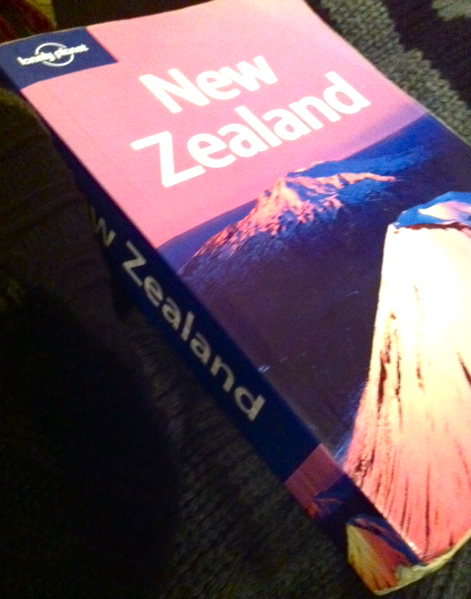
 There once was a time when trip planning was done by going to a book store or travel agent, collecting a mess of literature on the subject, going home, reading it a dozen times, making notes and finally booking your trip. Then along came the internet and… well it’s pretty much the same process. The biggest difference though is immediacy and totality of information – you can access everything on a topic and the updates keep on coming.
You could argue travel books are for techno-phobic geriatric globetrotters but that is only a half truth. It’s hard to argue the convenience of a trusty guidebook in your bag, dog eared and highlighted to death, complete with maps of the region and useful foreign phrases. These are not just used by old people and are very handy.
Any time a medium shift takes place there are a certain number of resisters and adopters; currently we reside in the overlap where both are used and some people use a combination for their planning. Smart companies employ both mediums to reach their audience, but digital isn’t the future, it’s the right now. Newspapers, books, magazines – these things will always exist in physical form, but where before it was the mainstay, it will occupy a niche reserved more for aficionados of the genre – more ornamental than functional. I love books, but the form is changing.
The biggest drawback to using the internet for research is also its strength, which is the sheer volume of information available. Particularly for a newcomer, it is ridiculously intimidating how much is out there. What do you type? Who do you trust? Publishing a book takes time – anyone can make a website that looks half presentable. For this, I completely understand the hesitancy to use the internet because it’s too damn big. Books are self contained, and for agoraphobic travellers out there, that’s comforting.
But don’t write the internet off just yet.
 Think of the internet as a book store without employees to ask for help; if you walk right in without knowing what you are looking for, chances are you will waste a lot of time and may leave unhappy. If on the other hand you come armed with an idea of what you are searching for, you can narrow your search considerably. Just in the same way as you don’t know how useful a book is until you skim it, the usefulness of a website may not become clear until you’ve visited it.
Of all the features Google has, the most invaluable to my travel planning has always been Google Maps. I mean, being able to plot routes and get travel distances before arriving is a stroke of genius. I used it to figure out where my Italian hostels were situated in relation to the train stations and for plotting my route on my Scotland road trip – I couldn’t imagine trying to do that with a guidebook map with the same precision. Add in the street view feature where available and getting your bearings just got a whole lot easier.
One thing that has always frustrated me about guidebooks is how they don’t give me enough information. Most guidebooks are designed to have something for everyone, but by doing this they are sometimes too brief in their accounts so as to remain a manageable size. If you hate art and are not going with kids, most guidebooks of Europe will be filled with unhelpful information. How many guidebooks publish prices of attractions? Not many, but this is because they are subject to change. This is where the internet shines – not only can you find out all of this up to date information, but you can get it from multiple sources to be certain of its accuracy.
So when it all comes down to it, should you Google or guidebook your trip? A lot depends on personal comfort, but unless the internet scares the crap out of you, it offers everything a book does and more.
Oh yeah… and visiting travel websites is a lot cheaper than books.