The Damajagua Cascades (27 Waterfalls) near Puerto Plata offers three tour options: 7 waterfalls (2 hours, ~$25-40), 12 waterfalls (2.5 hours, ~$35-50), or all 27 (3.5 hours, ~$50-80). Most visitors choose the 12-waterfall option for a balanced adventure that includes hiking, jumping from heights up to 25 feet, and sliding down natural water slides. A moderate fitness level is required, and all tours include helmet, life jacket, and mandatory local guide.
I’m going to be honest with you—visiting the 27 Waterfalls of Damajagua was one of the most thrilling, terrifying, and absolutely unforgettable experiences of my life. And I’ve done a lot of adventure activities.
This isn’t one of those gentle nature walks where you admire waterfalls from a distance. This is jumping off rocks into turquoise pools, sliding down natural water slides carved by centuries of rushing water, and climbing over slippery boulders while wondering if your travel insurance covers this kind of thing.
But here’s what makes it special: it’s real adventure. Not manufactured, not sanitized for tourists, but actual heart-pounding, adrenaline-rushing adventure. And if you do it right—with proper preparation and realistic expectations—it’ll probably be the highlight of your Dominican Republic trip.
I learned a lot during my chaotic experience visiting the 27 waterfalls, and I’m going to share everything you need to know to make your visit incredible.
What Are the Damajagua Cascades (27 Waterfalls)?
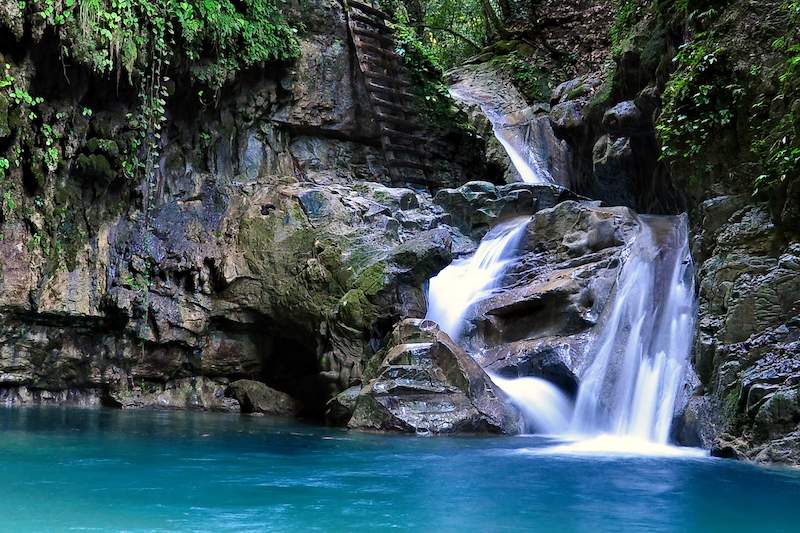
The Damajagua Cascades—also called the 27 Waterfalls, 27 Charcos, or Los 27 Charcos de Damajagua—are a series of waterfalls hidden in the mountains near Puerto Plata in the Dominican Republic. The waterfalls cascade down through a lush tropical canyon, creating natural pools, slides, and jumping spots along the way.
The experience works like this: you hike uphill for about 30-40 minutes through the rainforest to reach the starting point. Then you work your way back down through the waterfalls—jumping, sliding, swimming, and climbing as you go. It’s part hike, part water park, part extreme sport.
The waterfalls range from gentle cascades you can slide down to dramatic 25-foot drops you can jump from (if you’re brave enough). Each one is different, and the guides will show you the safest routes down at each level.
What makes this place unique is that it’s not overly developed or commercialized. Yes, there’s an entrance area with facilities, but once you’re on the trail, it feels wild and natural. You’re genuinely exploring the jungle, not walking through a theme park version of nature.
How to Get There from Puerto Plata and Other Areas
The Damajagua Cascades are located near the small town of Imbert, about 30-45 minutes from Puerto Plata depending on traffic and your starting point. The entrance is at Camino de Damajagua, 57000 Damajagua.
Transportation Options
Organized Tour with Pickup: This is the easiest option, especially if you’re staying at a resort. Most tours include round-trip transportation from Puerto Plata, Sosúa, Cabarete, or even Punta Cana (though that’s a much longer drive). Pickup service typically costs an additional $10-20 per person if it’s not included in your tour price.
Rental Car: If you’re comfortable driving in the Dominican Republic, you can rent a car and drive yourself. Just be aware that signage isn’t always clear, so use GPS and maybe download offline maps just in case. The roads are mostly paved but can be rough in some sections. Parking is available at the entrance.
Taxi or Uber: You can arrange a taxi from your hotel, but negotiate the price beforehand. Expect to pay $40-60 each way from Puerto Plata. Make sure the driver agrees to wait for you (the tour takes 3-5 hours depending on which option you choose) or arrange a pickup time.
Local Bus: This is the budget option but requires some adventure spirit. You can catch a guagua (local minibus) from Puerto Plata to Imbert, then take a motoconcho (motorcycle taxi) to the entrance. It’s cheap but time-consuming and not ideal if you’re not comfortable navigating local transportation.
I’d honestly recommend booking a tour with transportation included. After you’ve jumped off 12 waterfalls and hiked for hours, the last thing you want to worry about is finding your way back to your hotel.
7, 12, or 27 Waterfalls—Which Should You Choose?
This is the big decision, and there’s no single right answer. It depends on your fitness level, available time, and how much adventure you’re seeking.
The 7 Waterfalls Option
Duration: About 2 hours total (30 minutes up, 1-1.5 hours down)
Cost: Approximately $25-40 per person
Best For: Families with older kids, first-timers who want to test the waters, people with limited time, or those who aren’t super confident about their fitness level.
The 7-waterfall route gives you a taste of the experience without being too demanding. You’ll still do some jumping and sliding, but the heights aren’t as extreme and the overall physical requirements are more manageable. This is a good option if you’re traveling with kids over 8 years old (children under 8 typically can’t participate at all).
The downside? You’ll miss some of the most spectacular waterfalls, including the biggest jumps. If you’re reasonably fit and looking for adventure, you might feel like you didn’t get the full experience.
The 12 Waterfalls Option (Most Popular)
Duration: About 2.5-3 hours total (30-40 minutes up, 2+ hours down)
Cost: Approximately $35-50 per person
Best For: Most visitors—it offers the best balance of adventure and manageability.
This is what I did, and honestly, it was perfect. The 12-waterfall circuit includes most of the highlights—some serious jumps (including ones around 15-20 feet), multiple natural water slides, beautiful pools, and enough variety to keep things exciting without being exhausting.
It’s long enough to feel like a real accomplishment but not so long that you’re completely destroyed by the end. You’ll be tired, sure, but it’s a good tired. Not a “I think I’m going to die” tired.
This option hits the sweet spot for most adventure travelers. You get the thrill and the Instagram-worthy moments without having to be an extreme athlete.
The Full 27 Waterfalls Option
Duration: About 3.5-4+ hours total (40 minutes up, 3+ hours down)
Cost: Approximately $50-80 per person
Best For: Serious adventure seekers, very fit travelers, people who want to say they did all 27.
The full circuit is genuinely demanding. You’re talking about hours of climbing, jumping, swimming, and navigating slippery rocks. The payoff is that you see everything—including the source of the Damajagua River at the top, some of the most dramatic jumps, and fewer crowds since not everyone chooses this option.
But be realistic about your fitness level. This isn’t something you can fake your way through. If you’re not comfortable with heights, not a confident swimmer, or not in decent shape, the full 27 will be miserable rather than fun.
Also worth noting: during the dry season (December-April), water levels can be lower, and sometimes not all 27 waterfalls are accessible. Always check current conditions when booking.
My Recommendation
Go with the 12-waterfall option unless you have a specific reason to do otherwise. It’s the Goldilocks choice—not too easy, not too hard, just right. You’ll get incredible photos, have an amazing adventure, and probably won’t be completely wrecked the next day.
Physical Fitness Requirements (Be Honest With Yourself)
Let me be really clear about this because I think some tour descriptions undersell the physical demands: this activity requires a moderate to high level of fitness.
Here’s what “moderate fitness” actually means in this context:
- You can hike uphill for 30-40 minutes without needing to stop every five minutes
- You’re comfortable swimming and can tread water for extended periods
- You have reasonable upper body strength to pull yourself up rocks
- You don’t have knee or ankle problems that make climbing difficult
- You’re okay with heights (at least the ones you’ll be jumping from)
- You can follow instructions quickly and react to situations
The hike up is no joke. It’s uphill, often humid, and by the time you reach the top, you’ll be sweating. If you’re seriously out of shape, this part alone might be rough.
Then on the way down, you’re constantly climbing over rocks, which can be slippery. You’ll be jumping into pools where you need to swim to the side. You’ll be navigating uneven terrain. It’s not technically difficult, but it requires sustained energy and coordination.
Who Should NOT Do This Activity
The tour operators are clear about this, and they’re not just covering themselves legally—these restrictions are for your safety:
- Pregnant women
- People with back problems or recent back injuries
- People with heart conditions
- Anyone with serious mobility issues
- Children under 8 years old
- People who can’t swim
- Anyone with a serious fear of heights
If you have any doubts about your ability to handle this, talk to your doctor before booking. It’s better to be safe than to have a medical emergency in the middle of the jungle.
What to Wear and Bring (Essential Packing List)
This is where a lot of people mess up, so pay attention. What you wear and bring can make or break your experience.
What to Wear
Swimsuit: Wear a secure, athletic-style swimsuit. Not a bikini that ties with strings (those will come undone when you jump). Not loose board shorts that will fall down. Something that stays put no matter what.
Water Shoes with Good Grip: This is non-negotiable. You need closed-toe water shoes with decent rubber soles that provide traction on wet rocks. The cheap aqua sock style won’t cut it—they don’t have enough grip. Many people wear Keens, Tevas, or similar sport sandals. Some places rent water shoes if you don’t have them, but bring your own if possible.
Rash Guard or Athletic Shirt: Optional but recommended. A rash guard or quick-dry athletic shirt protects your skin from scrapes when you’re sliding down rocks. Plus it provides a bit of sun protection during the hike.
No Jewelry or Loose Items: Leave your jewelry, watches, and loose items at home or in your hotel safe. They will get lost.
What to Bring
- Waterproof Camera or Phone Case: You’ll want photos, trust me. A GoPro is ideal. If you’re bringing your phone, get a quality waterproof case—not just a cheap plastic bag. Test it before you go.
- Towel: For after the tour
- Change of Dry Clothes: You’ll be soaked, muddy, and exhausted. Bring comfortable, dry clothes for the ride back.
- Water-Resistant Sunscreen: Apply before you start. The sun is strong even in the jungle.
- Cash: For tips, photos from guides, snacks, or souvenirs
- Small Dry Bag: If you have one, for items you want to keep dry
What NOT to Bring
- Regular shoes or flip-flops (you can’t wear these on the tour)
- Expensive electronics that aren’t waterproof
- Valuables (there are lockers at the entrance, but don’t bring anything you’d be devastated to lose)
- Contact lenses (consider wearing glasses with a strap or just go without if possible—you might lose contacts in the water)
Tour Operator Recommendations and Pricing Breakdown
You have two main options for booking: go independently or book through a tour operator.
Independent Visit
You can show up at the Damajagua entrance and pay directly. This is the cheapest option—entrance fees range from about $10-25 depending on how many waterfalls you choose. The fee includes your helmet, life jacket, and mandatory guide.
However, you’ll need to arrange your own transportation, bring your own lunch (or buy food there), and navigate logistics yourself. This works well if you’re comfortable with that level of independence and have rental transportation.
Organized Tour Packages
Most tourists book through tour operators, which costs more ($50-80+ per person) but includes:
- Round-trip transportation from your hotel/resort
- Entrance fees and equipment (helmet, life jacket)
- Professional guide
- Lunch (usually a buffet)
- Sometimes drinks (including rum on the ride, as I experienced)
- Photo packages or services
Popular tour operators include local companies in Puerto Plata and major tour booking platforms like Viator, GetYourGuide, and TripAdvisor Experiences. Read recent reviews before booking—you want a company with good safety records, knowledgeable guides, and reliable transportation.
What About Photos?
Many guides will offer to take photos of you with their waterproof cameras and sell them to you afterward (usually $20-40 for a USB or download link). This can be worth it if you don’t have your own waterproof camera, and the guides know all the best angles and spots.
Just be clear upfront about whether photos are included in your package or if they cost extra.
Best Time to Visit (Seasonality Matters)
The waterfalls are open year-round, but your experience will vary significantly depending on when you visit.
Best Time: December to April (Dry Season)
This is optimal for waterfall adventures. The water is clearer, currents are less strong, weather is more predictable, and you’re less likely to deal with rain during your tour. The tradeoff is that this is peak tourist season, so expect more crowds and higher prices.
During particularly dry periods, water levels might be lower, which means fewer waterfalls are accessible (sometimes only 7-12 instead of all 27). But the conditions are safer and more comfortable.
Rainy Season: May to November
More water means more dramatic waterfalls and the ability to access all 27. But it also means stronger currents, cloudier water, and a higher chance of rain during your tour (which isn’t necessarily bad—you’re already wet).
September and October are particularly wet and also peak hurricane season. I wouldn’t recommend visiting during these months if you can avoid it—check out my thoughts on the best time to visit the Dominican Republic for more details.
Time of Day
Morning tours (starting around 8-9 AM) are generally better. You’ll beat the afternoon crowds, the lighting is better for photos, and it’s slightly cooler for the hike up. Plus you’ll have the rest of the day to recover afterward.
Safety Considerations and Common Injuries
I don’t want to scare you, but I do want you to be informed. This activity is generally safe when you follow instructions, but injuries can and do happen.
Common Issues
- Scrapes and bruises from rocks (very common, usually minor)
- Twisted ankles from slippery surfaces
- Banged knees or elbows
- Belly flops from improper jumping form
- Exhaustion or dehydration
How to Stay Safe
Listen to Your Guide: This is the most important rule. Your guide knows these waterfalls intimately and knows the safe routes. When they tell you where to jump, how to position your body, or which route to take, listen. Don’t try to show off or do things your own way.
Cross Your Arms When Jumping: This protects your chest and prevents your arms from flailing (which can lead to injury). Feet together, arms crossed, step off—don’t dive.
Don’t Jump if You’re Not Comfortable: Every waterfall has an alternative walking route if you don’t want to jump. There’s no shame in taking the walk. Peer pressure is not worth a broken bone.
Watch for Rocks: When you surface after jumping, orient yourself quickly and swim away from the waterfall. Rocks can be just below the surface.
Stay Hydrated: You’re exerting yourself in a tropical climate. Drink water before, during, and after.
Know Your Limits: If you’re exhausted, tell your guide. If something hurts, say something. Don’t push through pain to keep up with the group.
What the Experience Actually Feels Like
I think a lot of guides and tour descriptions don’t really convey what this experience is like emotionally, so let me try to paint the picture.
The hike up is humid and steep. You’ll be breathing hard. But the jungle is beautiful—lush, green, alive. You’ll hear birds and water and the chatter of your group.
When you reach the first waterfall and look down at the drop, there’s a moment of “what am I doing?” It looks higher from up there. Your brain will tell you this is a bad idea. But then someone else goes, and they’re fine, and you realize it’s actually okay.
That first jump is pure adrenaline. The moment between leaving the rock and hitting the water feels like it lasts forever. The cold shock when you hit the water. The relief when you surface and realize you’re completely fine. And then? You want to do it again.
Each waterfall is a little different. Some you slide down, which feels like the world’s best natural water slide. Some you jump from, each one testing your courage a little more. Some you climb around, using handholds and footholds while water rushes past you.
By the middle of the tour, you’ve found your rhythm. You trust your guide, you trust yourself, and you’re just present in the moment—jumping, swimming, laughing, experiencing pure adventure.
By the end, you’re exhausted but exhilarated. Bruised but proud. Muddy but happy. It’s the kind of tired where you can’t stop smiling.
Facilities and Amenities at the Entrance
The entrance area has basic but adequate facilities:
- Changing rooms and bathrooms: Available but basic
- Lockers: Secure your belongings while you’re on the tour
- Small restaurant/snack bar: Food and drinks available
- Equipment distribution: Where you’ll get your helmet and life jacket
- Parking: If you drove yourself
- Souvenir shop: Small selection of local crafts
Don’t expect luxury, but everything you need is there.
Making Reservations and Booking in Advance
I highly recommend booking in advance, especially during peak season (December-April). Tours can sell out, particularly if you’re visiting from a cruise ship when multiple ships are in port.
Many hotels and resorts can book tours for you, often at a markup but with the convenience of having everything arranged. You can also book directly through tour operator websites or through platforms like Viator or GetYourGuide.
Read recent reviews before booking. Look for comments about:
- Guide quality and safety
- Transportation reliability (did they actually pick people up on time?)
- Accuracy of tour descriptions
- Value for money
- Size of groups (smaller is usually better)
After the Waterfalls: What Else to Do in Puerto Plata
If you’re in the area, the waterfalls are just one of many Puerto Plata attractions worth exploring.
The cable car to Mount Isabel de Torres offers incredible views and is much less physically demanding if you need a rest day after your waterfall adventure. The historic Fort San Felipe is fascinating for history buffs. And Umbrella Street in downtown Puerto Plata makes for great photos.
There are also plenty of other adventure activities in the Dominican Republic if you’re looking to keep the adrenaline going—ziplining, ATV tours, horseback riding, and incredible diving spots.
Final Tips and Personal Recommendations
After doing this tour and talking to countless other travelers about their experiences, here are my final pieces of advice:
Just commit to it. The hardest part is that first jump. Once you do it, the rest becomes easier. Don’t stand at the top overthinking—just go.
Bring your sense of humor. You’re going to look ridiculous in your helmet and life jacket. You might belly flop. You’ll definitely get muddy. Embrace it.
Tip your guide. They work incredibly hard to keep you safe and make the experience fun. $10-20 per person is standard if they did a good job.
Don’t compare yourself to others. Some people in your group will be jumping off everything with no fear. Others will be more cautious. Go at your own pace.
Take breaks when you need them. It’s not a race. Catch your breath, drink water, enjoy the moment.
Protect the environment. This is a protected area. Don’t litter, don’t disturb wildlife, follow the marked paths. We want this place to stay beautiful for future visitors.
The 27 Waterfalls of Damajagua is one of those rare experiences that lives up to the hype. Yes, it’s physically demanding. Yes, it pushes you out of your comfort zone. But that’s exactly what makes it memorable.
Go prepared, go with the right expectations, and go ready for adventure. You won’t regret it.
Frequently Asked Questions
Can you visit the 27 waterfalls without a guide?
No, local guides are mandatory for safety reasons. The guides are knowledgeable about the terrain, know the safe routes, and are trained to assist in emergencies. This requirement is strictly enforced, and honestly, you wouldn’t want to attempt this without a guide anyway. The guidance is included in your entrance fee.
How much does it cost to visit Damajagua Cascades?
If you go independently, entrance fees range from approximately $10-25 depending on how many waterfalls you choose (7, 12, or 27). Organized tour packages that include transportation, lunch, and drinks typically cost $50-80 per person. The price varies by season, tour operator, and what’s included. Always confirm what’s covered before booking.
What’s the best time of year to visit the waterfalls?
December through April offers the best conditions—clearer water, less strong currents, and more predictable weather. However, water levels may be lower during particularly dry spells. May through November has more water and more dramatic falls, but also stronger currents and higher chance of rain. Avoid September-October if possible due to hurricane season and peak mosquito activity.
Can kids do the 27 waterfalls tour?
Children must be at least 8 years old to participate, and they’re typically limited to the 7-waterfall option. Kids need to be comfortable swimming, not afraid of heights, and physically capable of the hike and climbs. Parents should honestly assess whether their child can handle it—this isn’t a gentle family activity. Teenagers who are active and adventurous usually love it.
Is the 27 waterfalls tour scary?
It depends on your comfort level with heights and adventure activities. The jumps can feel intimidating, especially the first time, with some drops reaching 20-25 feet. However, every jump is optional—there are walking routes around each waterfall if you don’t want to jump. Most people find that after the first jump, their confidence grows and it becomes more exciting than scary. If you have a genuine phobia of heights, this probably isn’t for you.
What happens if it rains during the tour?
The tour usually continues unless there’s severe weather or dangerous conditions. You’re already getting wet anyway, so a little rain doesn’t change much. In fact, some people enjoy the added drama. However, if there’s lightning or flash flood warnings, tours may be postponed or canceled for safety. Heavy recent rainfall can also make currents stronger and the waterfalls more challenging.